






















Quantum communication and cryptography represent some of the most exciting and transformative applications of quantum technology. By exploiting the unique properties of quantum mechanics—particularly phenomena like quantum entanglement and the no-cloning theorem—quantum communication offers unprecedented levels of security and data integrity. In this article, we will explore the mechanisms of quantum communication, focusing on the role of quantum key distribution (QKD), the potential of the quantum internet, and the challenges and future implications of quantum cryptography.
1. Introduction to Quantum Communication
At its core, quantum communication leverages the fundamental principles of quantum mechanics to transmit information securely over long distances. Unlike classical communication, where information is encoded in classical bits (0 or 1), quantum communication encodes information in quantum bits, or qubits, which can exist in multiple states simultaneously due to superposition. This allows for the transmission of data in a fundamentally different way, enabling features such as secure communication and ultra-fast data transfer.
Quantum communication is poised to revolutionize the field of secure data transfer by offering unbreakable encryption based on the laws of physics. This section introduces the foundational principles of quantum communication and explores why it is considered the next frontier in secure information transfer.
1.1 Key Concepts in Quantum Communication
- Superposition: A quantum system, such as a qubit, can exist in a superposition of multiple states at once, rather than just one. This allows for parallel processing of information, which can drastically increase the efficiency of communication systems.
- Entanglement: Quantum entanglement occurs when two or more particles become linked, such that the state of one particle directly influences the state of another, even if they are separated by vast distances. This phenomenon forms the backbone of many quantum communication protocols, enabling secure communication over long distances.
- No-Cloning Theorem: One of the key security features of quantum communication is the no-cloning theorem, which states that it is impossible to create an identical copy of an arbitrary unknown quantum state. This ensures that intercepted quantum information cannot be replicated, preventing unauthorized access to sensitive data.
1.2 Benefits of Quantum Communication
- Unbreakable Security: One of the most compelling reasons to adopt quantum communication is its security. Unlike traditional encryption methods, which can eventually be broken by powerful classical computers or advances in cryptanalysis, quantum encryption is based on the laws of quantum physics. It guarantees that any eavesdropping or interception will alter the transmitted information, making the presence of unauthorized parties detectable.
- Long-Distance Communication: While conventional communication systems suffer from signal degradation over long distances, quantum communication systems—when paired with technologies like quantum repeaters—hold the promise of achieving secure communication over much greater distances than currently possible.
2. Quantum Key Distribution (QKD)
Quantum Key Distribution (QKD) is arguably the most significant application of quantum communication in cryptography. QKD allows two parties to securely exchange encryption keys over an insecure channel without the risk of interception. This section will delve deeper into the mechanisms behind QKD and its potential impact on modern cryptography.
2.1 How QKD Works
The basic premise of QKD is simple: two parties, traditionally called Alice and Bob, wish to exchange a secret encryption key for secure communication. However, they are communicating over a potentially insecure channel, where an eavesdropper (Eve) could be listening in. QKD uses quantum mechanics to ensure that any eavesdropping attempt is immediately detectable.
- Quantum Entanglement-Based QKD: In this method, Alice and Bob share a pair of entangled particles. When Alice measures her particle, Bob’s particle will collapse into a corresponding state due to the entanglement. Any attempt by Eve to measure the quantum states would disrupt the system, alerting Alice and Bob to the presence of an eavesdropper.
- BB84 Protocol: The BB84 protocol, proposed by Charles Bennett and Gilles Brassard in 1984, is the most widely known QKD protocol. Alice sends Bob a series of qubits encoded in one of two bases (e.g., rectilinear or diagonal). Bob then measures the qubits in one of the two bases, and afterward, they compare their results publicly. Any discrepancies between Alice’s and Bob’s measurements indicate that the transmission has been intercepted by Eve.
2.2 Security of QKD
The security of QKD lies in the fact that quantum information cannot be copied without detection. If an eavesdropper tries to intercept the key exchange, their measurements will introduce detectable errors in the system. This is because quantum states are inherently fragile and cannot be cloned or measured without disrupting the information contained within them. The result is that QKD enables the creation of cryptographic keys that are secure against both classical and quantum attacks.
QKD protocols have already been tested experimentally, with some successful demonstrations of quantum-secured communication over distances of several hundred kilometers using optical fibers and free-space communication.
2.3 Practical Challenges of QKD
Despite its potential, there are several challenges to implementing QKD on a large scale:
- Distance Limitations: The transmission of quantum states over long distances suffers from losses due to the absorption and scattering of photons in optical fibers. This limits the range of QKD to tens or hundreds of kilometers without the use of repeaters.
- Quantum Repeaters: Quantum repeaters are devices that can extend the distance over which quantum information can be transmitted by creating entanglement between intermediate nodes and ensuring that the quantum state is preserved. However, the development of efficient quantum repeaters is still in the early stages.
- Infrastructure Requirements: QKD requires significant infrastructure, including the use of specialized photon detectors, single-photon sources, and optical fiber networks. Setting up such infrastructure on a large scale is costly and logistically challenging.
3. The Quantum Internet: Enabling Global Quantum Communication
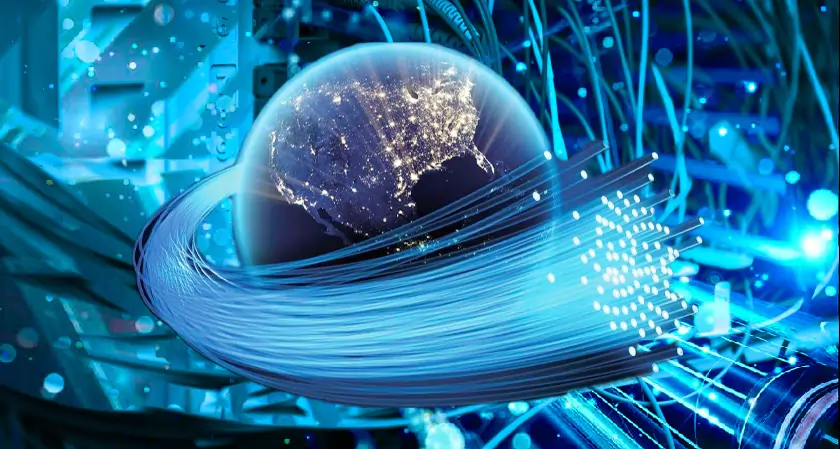
The concept of a quantum internet is the next step in the evolution of quantum communication. Unlike classical communication networks, which rely on classical bits, a quantum internet would rely on quantum bits (qubits) and harness quantum entanglement to enable ultra-secure communication, distributed quantum computing, and real-time quantum information sharing.
3.1 Key Components of the Quantum Internet
The quantum internet will consist of several key components:
- Quantum Nodes: Quantum nodes are devices capable of processing and transmitting quantum information. These nodes would be connected through quantum communication channels, such as optical fibers or free-space links.
- Quantum Repeaters: As mentioned earlier, quantum repeaters are essential for extending the range of quantum communication. These devices will allow quantum information to travel over long distances by generating and distributing entanglement between distant quantum nodes.
- Quantum Routers: Quantum routers will enable the routing of quantum information between quantum nodes. They are designed to manipulate quantum states and guide quantum information through the network without measuring or collapsing the qubit states.
3.2 Applications of the Quantum Internet
A fully functional quantum internet would offer several revolutionary applications:
- Quantum Teleportation: Quantum teleportation is the transfer of quantum information between two distant locations without physically moving the particles themselves. This could enable instant transmission of quantum information over vast distances.
- Distributed Quantum Computing: Quantum internet could enable the creation of distributed quantum computers, where multiple quantum computers are connected in a network, allowing them to work together to solve complex problems that exceed the capabilities of any single quantum computer.
- Quantum-Enhanced Security: The quantum internet would provide an unprecedented level of security, as any attempt to intercept or measure quantum communication would immediately be detected. This could have profound implications for secure communication in fields such as finance, government, and military.
3.3 Challenges in Building the Quantum Internet
Building a global quantum internet faces several technical challenges:
- Quantum Memory: Storing quantum information for extended periods is a difficult task due to the fragile nature of quantum states. Developing robust quantum memory devices is crucial for enabling quantum communication over large networks.
- Interfacing with Classical Networks: To be practical, the quantum internet must be able to interface with existing classical communication infrastructure. This requires hybrid systems that combine both classical and quantum communication technologies.
- Scalability: Building a large-scale quantum internet will require an extensive network of quantum nodes, repeaters, and routers. Ensuring the scalability of these systems while maintaining their quantum integrity is a significant challenge.
4. Implications for Cryptography and Security
Quantum cryptography, particularly QKD, represents a paradigm shift in the way we approach information security. As quantum computers advance, they will eventually be able to break widely used cryptographic protocols like RSA and elliptic curve cryptography, which form the backbone of current internet security. Quantum cryptography offers a solution to this problem by enabling cryptographic methods that are secure even against quantum-powered attackers.
4.1 Post-Quantum Cryptography
In addition to quantum cryptography, another important area of research is post-quantum cryptography (PQC). PQC focuses on developing cryptographic algorithms that are secure against quantum attacks but do not rely on quantum communication. These algorithms can be implemented on classical computers and are seen as an essential component of securing data in a post-quantum world.
4.2 Potential Threats and Countermeasures
As quantum technology evolves, so too do the potential security threats. While quantum cryptography offers robust protection, there is a need for continuous research into new attack vectors that could emerge with advancements in quantum computing. Governments, security agencies, and researchers must remain vigilant in developing new countermeasures and protocols to stay ahead of potential quantum threats.
5. Conclusion
Quantum communication and cryptography are at the forefront of the quantum technology revolution, offering the potential to completely transform the way we secure and transmit information. Quantum key distribution, quantum internet, and quantum cryptography promise to deliver unbreakable security and unlock new capabilities in data transfer and computing. However, significant challenges remain, including technical hurdles related to distance limitations, infrastructure, and scalability.
As research and development in quantum technology continue to progress, the vision of a global quantum internet and quantum-secured communications is becoming increasingly plausible. The transition to a quantum-enabled world will require careful consideration of security, infrastructure, and ethical implications, but the potential benefits in terms of data security and computational power are too significant to ignore.
The future of secure communication lies in the principles of quantum mechanics, and as we move closer to realizing this future, the world of cryptography, data transfer, and internet security is poised for a revolution.