




















Quantum technology is rapidly emerging as a frontier in modern science and engineering, offering the potential to revolutionize fields as diverse as computing, communication, cryptography, and materials science. At its core, quantum technology leverages the unique and often counterintuitive principles of quantum mechanics, such as superposition, entanglement, and quantum tunneling. These principles enable quantum systems to perform tasks that would be unimaginable using classical technologies. However, despite its immense potential, quantum technology faces numerous challenges that must be overcome before it can realize its full impact.
In this article, we will explore the key challenges in the development of quantum technology, ranging from the theoretical limitations of quantum mechanics to the engineering difficulties of building and maintaining quantum systems. We will also examine the implications of these challenges for the future of quantum computing, communication, and beyond.
1. Theoretical Challenges in Quantum Technology
1.1 The Limits of Quantum Mechanics
One of the first challenges facing quantum technology is the theoretical understanding of quantum mechanics itself. While the basic principles of quantum mechanics have been well-established for over a century, many aspects of the theory remain deeply puzzling, especially when it comes to interpreting the behavior of quantum systems.
For example, the phenomenon of quantum superposition—where a particle can exist in multiple states simultaneously—appears to defy our classical understanding of reality. The famous thought experiment of Schrödinger’s cat, which posits a cat in a superposition of alive and dead states until observed, illustrates the philosophical dilemma of measurement in quantum mechanics. Some interpretations of quantum mechanics, such as the Copenhagen interpretation, argue that a system exists in a probabilistic state until measured. Others, like the many-worlds interpretation, suggest that all possible outcomes occur, each in a separate, branching universe.
These differing interpretations create uncertainty in the development of quantum technologies, as they raise questions about the reliability of quantum systems and the consequences of quantum measurement. Until a more definitive understanding of quantum mechanics is achieved, quantum technologies may continue to be hindered by these fundamental conceptual challenges.
1.2 Quantum Decoherence and the Measurement Problem
Quantum decoherence is one of the most significant theoretical challenges in the development of practical quantum technology. Decoherence occurs when a quantum system interacts with its environment, causing it to lose its quantum coherence and behave more classically. This process is responsible for the transition from the probabilistic nature of quantum systems to the deterministic outcomes observed in the macroscopic world.
In quantum computing, decoherence is a major obstacle to maintaining qubits in their superposition state long enough to perform useful computations. A qubit is essentially a quantum bit of information that can exist in multiple states simultaneously, providing exponential parallelism for computations. However, as qubits interact with their surroundings, their quantum states degrade, and they lose their ability to perform quantum calculations.
Researchers are exploring ways to minimize decoherence, such as using error correction codes and designing quantum systems that are less sensitive to environmental factors. However, these efforts are still in the early stages, and much work remains to be done to ensure the stability and longevity of quantum systems.
2. Engineering Challenges in Quantum Technology
2.1 Qubit Implementation and Scalability
One of the most significant engineering challenges in quantum technology is the physical realization of qubits. There are various approaches to building qubits, each with its own set of challenges. These include:
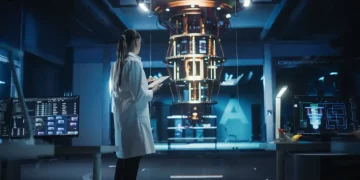
- Superconducting Qubits: These are the most widely used type of qubits in current quantum computers. They are made using superconducting circuits that can store quantum information. However, superconducting qubits require extremely low temperatures (close to absolute zero) to function, which necessitates complex and expensive cryogenic systems.
- Trapped Ions: Trapped ion qubits rely on individual ions suspended in electromagnetic fields and manipulated using lasers. While they have demonstrated high fidelity and long coherence times, scaling up the number of qubits in a trapped ion system is challenging due to the complexity of controlling and interacting with many ions simultaneously.
- Topological Qubits: Topological qubits are a promising approach to creating qubits that are more resistant to decoherence. They are based on exotic particles called anyons, which are predicted to exist in certain two-dimensional materials. However, the development of topological qubits is still in its early stages, and researchers have yet to demonstrate a viable method for creating and manipulating these particles in a controlled manner.
Scaling up quantum systems to a practical size—one that can outperform classical computers for real-world tasks—is another major engineering challenge. Current quantum computers are limited to just a few dozen qubits, and achieving the thousands or millions of qubits needed for large-scale computation requires overcoming significant obstacles in terms of qubit reliability, interconnectivity, and error correction.
2.2 Quantum Error Correction
Quantum error correction is a critical challenge in quantum computing. Unlike classical bits, qubits are highly susceptible to errors due to decoherence and other quantum noise. To maintain the integrity of quantum information over long computation times, quantum systems need robust error correction methods.
However, quantum error correction is significantly more complicated than classical error correction. For one thing, quantum information cannot be copied or cloned due to the no-cloning theorem. This means that quantum error correction requires the use of entangled qubits and redundant encoding schemes, which greatly increases the number of qubits needed for error correction. As a result, achieving fault-tolerant quantum computation will require substantial overhead in terms of qubit resources and computational complexity.
While various quantum error correction codes, such as the surface code and the Shor code, have been proposed, implementing these codes in real quantum hardware is still a daunting task. Researchers are actively working on developing more efficient and practical error correction schemes, but it remains one of the biggest challenges in scaling up quantum computers.
2.3 Quantum Control and Measurement
In addition to building and scaling qubits, quantum technology faces significant challenges in the areas of control and measurement. The ability to manipulate quantum systems with high precision is essential for performing quantum computations and experiments. This requires highly advanced techniques in quantum control, such as precise laser pulses for manipulating qubits, as well as specialized hardware for readout and measurement.
However, quantum systems are notoriously difficult to control. Small fluctuations in the environment—such as temperature changes, electromagnetic fields, or mechanical vibrations—can introduce errors in quantum operations. Achieving the level of precision required for large-scale quantum computing requires overcoming these sources of noise and interference, which necessitates advances in both hardware design and control algorithms.
3. Challenges in Quantum Communication and Cryptography
3.1 Quantum Key Distribution (QKD)
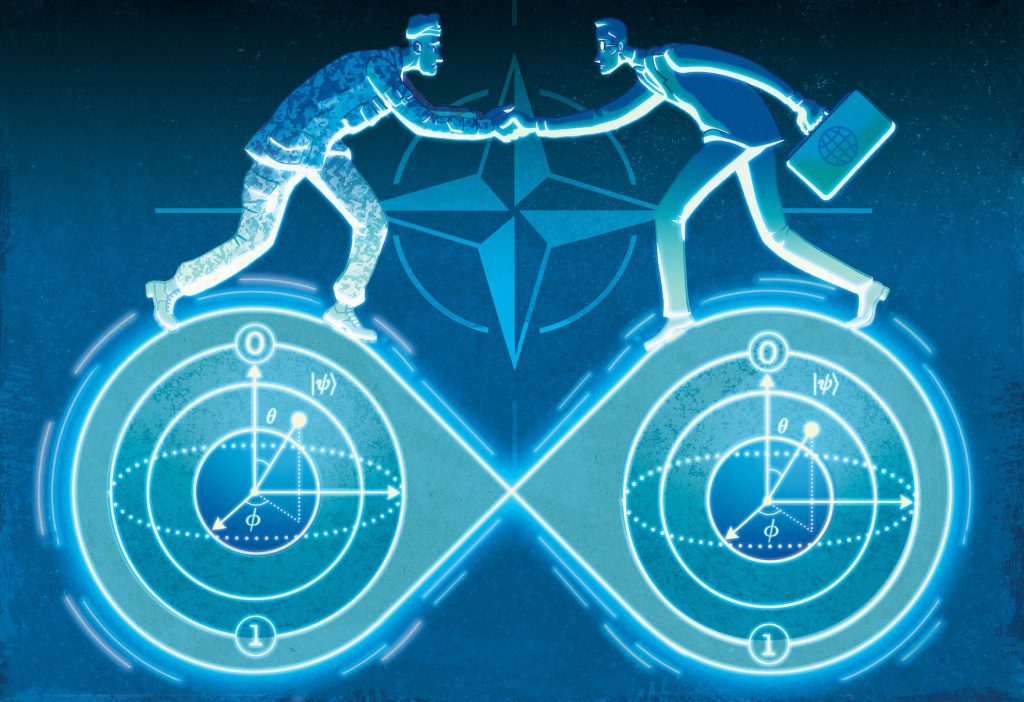
Quantum key distribution (QKD) is one of the most promising applications of quantum technology in the field of cryptography. QKD allows two parties to securely exchange encryption keys by exploiting the principles of quantum mechanics, such as the no-cloning theorem and quantum entanglement. This ensures that any eavesdropping attempt on the quantum communication channel would be detected, providing a level of security that is impossible with classical encryption methods.
However, there are several challenges in implementing QKD on a global scale. One of the main obstacles is the transmission of quantum information over long distances. Quantum signals are easily disrupted by noise and loss, and the transmission of quantum states over optical fibers is limited by the distance that photons can travel before they lose coherence. While research in quantum repeaters and satellite-based QKD aims to overcome these limitations, significant technical hurdles remain before secure global quantum communication networks can be realized.
3.2 Quantum Internet
Building a quantum internet, a network capable of transmitting quantum information securely and efficiently across long distances, is another major challenge. The quantum internet promises to revolutionize communication by enabling ultra-secure data transmission and distributed quantum computing.
However, building such an infrastructure requires advances in several key areas, including the development of quantum repeaters, quantum routers, and quantum memory devices. Additionally, quantum information needs to be encoded in such a way that it can be transmitted over existing optical fiber networks or through free-space optical links. The practical deployment of a global quantum internet is still far from realization, and researchers are only beginning to explore the feasibility of such networks.
4. Ethical and Societal Implications
4.1 Security Risks and Ethical Concerns
As quantum technologies advance, they raise several ethical and societal concerns. One of the most significant is the potential for quantum computers to break existing encryption schemes. If large-scale quantum computers become a reality, they could easily decrypt sensitive information that is currently protected by classical encryption methods, such as RSA or AES. This poses significant risks to data security, privacy, and national security.
On the other hand, quantum cryptography, particularly QKD, offers a solution to these challenges by enabling unbreakable encryption. However, the widespread deployment of quantum cryptography could also lead to new security threats, as it could potentially be used to create highly secure communication channels that are difficult to monitor or control.
4.2 Disruption to Existing Industries
The development of quantum technology also has the potential to disrupt existing industries and power structures. For example, quantum computing could revolutionize fields such as artificial intelligence, drug discovery, and materials science by solving problems that are currently intractable for classical computers. This could lead to significant economic shifts, as industries and governments race to harness the power of quantum technologies.
At the same time, quantum technology could also lead to new forms of inequality, as countries or companies with access to quantum resources may gain a competitive advantage in areas such as cybersecurity, finance, and defense. Addressing these disparities will require careful thought and international cooperation to ensure that the benefits of quantum technology are distributed fairly and equitably.
Conclusion
Quantum technology holds immense promise, offering the potential to transform computing, communication, and cryptography, among many other fields. However, the challenges it faces—ranging from theoretical questions in quantum mechanics to practical engineering and societal implications—are substantial and cannot be ignored. Overcoming these challenges will require continued advances in quantum theory, hardware development, error correction, and control systems.
As researchers and engineers work to overcome these hurdles, quantum technology will undoubtedly play a pivotal role in shaping the future of science and technology. While we may not yet be on the brink of a quantum revolution, the rapid progress being made in the field suggests that the ultimate promise of quantum technology is within reach.