



























Introduction
In the modern era, Artificial Intelligence (AI) and automation technologies are at the forefront of reshaping how businesses operate and how individuals approach tasks across various industries. AI refers to the ability of machines to learn, reason, and perform tasks that typically require human intelligence, such as decision-making, speech recognition, and problem-solving. Meanwhile, automation involves using technology to perform repetitive or complex tasks with minimal human intervention.
Together, AI and automation are driving substantial increases in productivity and work efficiency, transforming business models, and changing the nature of work itself. From manufacturing to service industries, these technologies have led to more efficient workflows, cost savings, and even new opportunities for innovation. However, they also come with their own set of challenges, including concerns over job displacement, data privacy, and the need for upskilling the workforce.
This article explores the relationship between AI, automation, and productivity, examining how these technologies enhance work efficiency across various sectors. We will also discuss the potential benefits and challenges associated with their widespread adoption and what the future holds for a more automated, AI-driven workforce.
1. Understanding AI and Automation Technologies
1.1 Defining Artificial Intelligence (AI) and Automation
- Artificial Intelligence is a field of computer science focused on creating machines that can mimic human intelligence. It involves various subfields such as machine learning (ML), natural language processing (NLP), computer vision, and robotics. AI enables machines to recognize patterns, make predictions, understand language, and make autonomous decisions.
- Automation, on the other hand, refers to the use of machines and technology to perform tasks without direct human intervention. It can be applied across different levels, from simple tasks (like data entry) to more complex functions (like robotic process automation (RPA) or industrial robots that assemble products).
1.2 How AI and Automation Complement Each Other
While AI is focused on enabling machines to think and learn like humans, automation is focused on streamlining repetitive tasks. When combined, AI can empower automation tools with the ability to learn from data, make decisions in real-time, and adapt to new situations. For example, AI-powered automation systems can predict when equipment will fail, optimizing maintenance schedules and reducing downtime in manufacturing plants. This synergy enhances efficiency, reduces human error, and frees up employees to focus on higher-level strategic tasks.
2. The Impact of AI and Automation on Productivity
2.1 Boosting Efficiency Across Industries
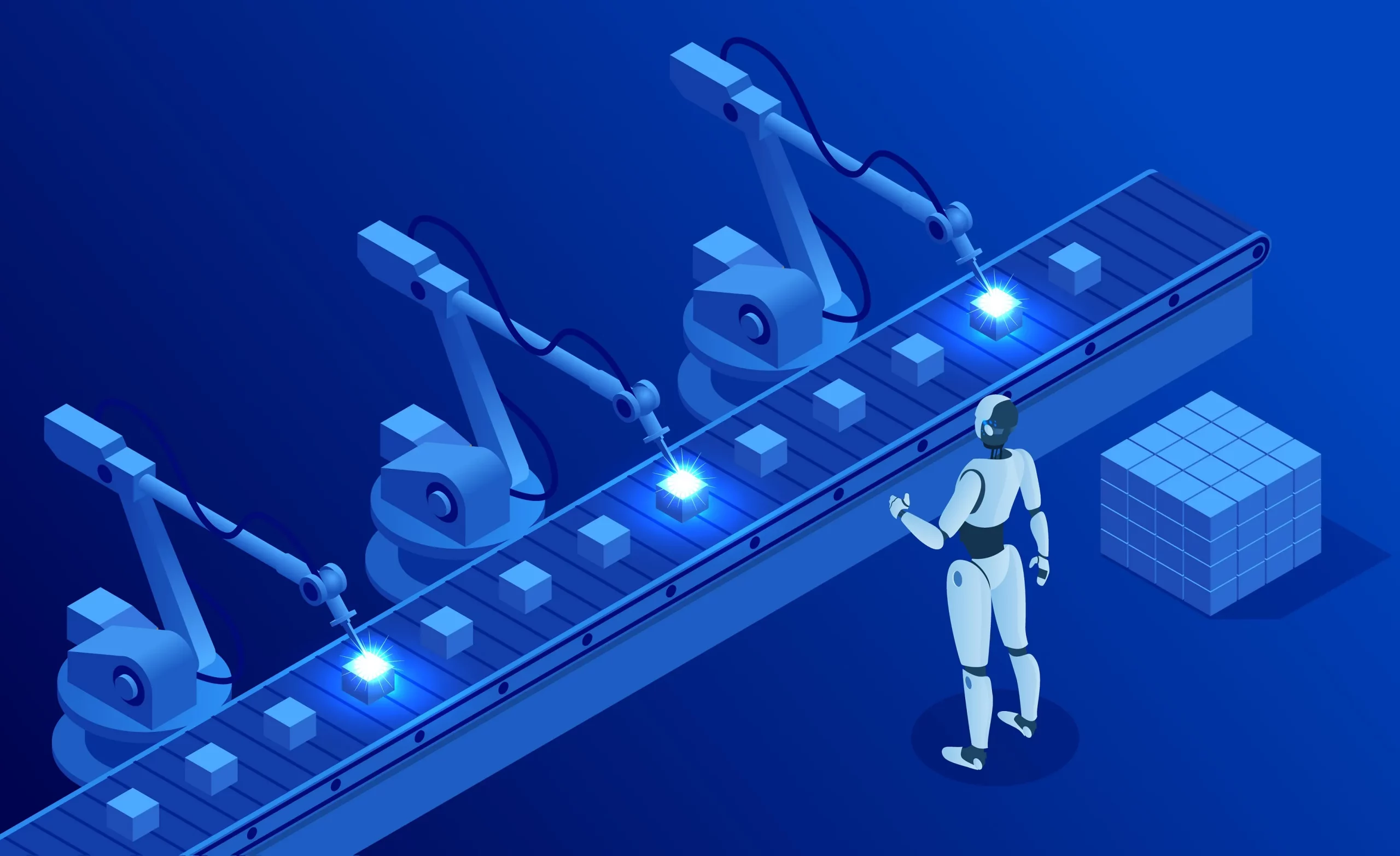
- Manufacturing: One of the most notable applications of AI and automation is in manufacturing, where robots and AI systems have revolutionized production lines. Through AI-driven predictive maintenance, automated systems can analyze equipment performance and detect potential failures before they occur, reducing costly downtime. Automation has also made manufacturing processes faster and more precise, ensuring higher quality output with fewer errors.
- Healthcare: In healthcare, AI and automation are improving productivity in diagnostics, patient care, and administrative tasks. For example, AI algorithms can analyze medical images and detect conditions such as cancer with a high level of accuracy. Additionally, robotic surgeries and AI-assisted diagnosis are enhancing the productivity of healthcare professionals, enabling them to focus more on patient care while automating routine administrative tasks like scheduling and billing.
- Finance: In the financial industry, automation and AI are used for fraud detection, risk assessment, and algorithmic trading. AI systems can analyze massive amounts of data in real-time to identify potential risks or fraud attempts, allowing for quicker decision-making. This reduces manual labor and increases operational efficiency in financial institutions.
- Customer Service: AI-powered chatbots and virtual assistants are transforming customer service by handling routine inquiries and requests. These tools can respond to customer queries 24/7, reducing the need for human agents and improving response times. Automation allows customer service teams to focus on more complex or escalated issues, improving overall service efficiency.
2.2 Enhancing Collaboration and Decision-Making
AI systems can also enhance collaboration and decision-making within organizations by providing real-time insights and recommendations. For instance, AI-driven business analytics tools can analyze vast amounts of data, identify trends, and offer actionable recommendations. This allows executives to make data-driven decisions faster and with more accuracy.
Furthermore, AI can improve cross-functional collaboration by automating routine communication tasks such as scheduling meetings, sending reminders, and managing project timelines. By automating these administrative burdens, teams can focus on higher-value work.
3. The Role of AI and Automation in Workforce Efficiency
3.1 Task Automation and Role Transformation
Automation and AI can significantly reduce the time spent on repetitive tasks, leading to increased worker productivity. Tasks such as data entry, report generation, and inventory management that were traditionally manual and time-consuming can now be automated. As a result, employees can focus on more strategic, creative, and decision-making tasks, adding more value to their roles.
However, this shift also means that certain roles will evolve or become obsolete. For example, administrative tasks that once required large teams of human workers can now be handled by AI-powered systems, leading to a reduction in the number of personnel needed for certain tasks. At the same time, new roles in AI management, data analysis, and robotic oversight are emerging, reflecting the changing landscape of work.
3.2 The Role of AI in Upskilling and Reskilling
The adoption of AI and automation technologies also brings about the need for employees to develop new skills. As repetitive tasks are automated, workers will need to be reskilled to perform higher-value work, such as AI management, data analysis, and creative problem-solving.
Many companies are now investing in training programs that focus on AI literacy and technical skills. Upskilling initiatives can help workers transition to new roles, ensuring that they remain productive in an increasingly automated world. AI is also being used to create personalized learning paths for employees, helping them acquire the skills needed for future roles.
3.3 Redefining Workplace Culture and Productivity Metrics
The introduction of AI and automation technologies also requires a shift in how productivity is measured and understood. Traditional productivity metrics—such as output per hour or sales per employee—may no longer fully reflect the impact of automation. Instead, organizations will need to embrace new approaches to measure efficiency, creativity, and collaboration.
AI tools can provide detailed performance insights, helping organizations understand how different teams or processes contribute to overall productivity. This allows for a more nuanced approach to measuring success in a workplace that leverages AI and automation.
4. Benefits of AI and Automation in Enhancing Productivity
4.1 Cost Reduction
One of the most significant advantages of AI and automation is cost reduction. By automating routine tasks, businesses can reduce the need for manual labor, minimize human error, and lower operational costs. In industries like manufacturing, automation has dramatically reduced the cost of production while improving product quality.
AI-powered predictive analytics can also optimize supply chain management, reducing costs associated with inventory management, procurement, and transportation.
4.2 Increased Speed and Accuracy
AI systems can process large amounts of data at speeds that far exceed human capabilities, enabling faster decision-making and more accurate predictions. For example, in financial markets, AI can analyze market trends in real-time and execute trades much faster than human traders.
Moreover, AI and automation reduce the likelihood of human errors, which can have costly consequences. For instance, in healthcare, AI-driven diagnostics can reduce the chance of misdiagnosis, leading to more accurate treatment plans and better patient outcomes.
4.3 Scalability and Flexibility
AI and automation technologies also offer businesses the ability to scale operations quickly and efficiently. Once an automation system is implemented, it can handle increasing volumes of work with little to no additional cost, unlike traditional systems that require more human labor or infrastructure. This scalability makes AI and automation particularly attractive to businesses looking to expand rapidly without proportional increases in labor costs.
Additionally, AI systems can adapt to changing circumstances by learning from new data, making them highly flexible in dynamic business environments. This flexibility is especially useful in industries where market conditions and customer preferences can change rapidly.
5. Challenges and Considerations
5.1 Job Displacement and Economic Impact
While AI and automation bring significant productivity benefits, they also raise concerns about job displacement. As machines take over routine and repetitive tasks, certain jobs may become obsolete. This could lead to a shift in employment patterns, with some workers facing job losses in industries like manufacturing, customer service, and transportation.
Governments and organizations will need to address these challenges through education, reskilling, and social support systems to ensure that displaced workers can transition into new roles. Universal basic income (UBI) and other safety nets may also be explored as potential solutions to mitigate the negative effects of job displacement.
5.2 Data Privacy and Security
The widespread use of AI and automation raises significant concerns about data privacy and security. AI systems often rely on large datasets, including sensitive personal and business information, which can be vulnerable to cyberattacks and misuse. Businesses and regulators must ensure that proper safeguards are in place to protect data from breaches and unauthorized access.
AI systems also raise ethical concerns related to bias and discrimination. Without proper oversight, AI algorithms may perpetuate existing societal biases, leading to unfair outcomes. It is essential to implement measures that ensure AI systems are transparent, fair, and unbiased.
Conclusion
Artificial Intelligence (AI) and automation have already begun to transform industries by improving productivity and workplace efficiency. The combination of AI’s ability to learn, reason, and analyze large datasets with the efficiency of automation is revolutionizing business processes, from manufacturing to healthcare to finance. While these technologies offer numerous benefits, including cost savings, faster decision-making, and scalability, they also present challenges that must be addressed, such as job displacement, data privacy concerns, and ethical issues.
As we look to the future, the role of AI and automation in the workplace will only continue to grow. With the right investment in education, reskilling, and ethical frameworks, businesses can harness the full potential of these technologies while ensuring that their workforce remains adaptable and productive in an increasingly automated world.