






















Introduction
The world of computing is on the brink of a revolution. For decades, traditional computing has been driven by classical computers that use bits as the fundamental unit of information. These bits, which can either represent a 0 or a 1, have served as the cornerstone of every computational task—from basic arithmetic operations to the complex simulations that power modern technologies. However, quantum computing, a technology that harnesses the principles of quantum mechanics, is poised to disrupt the entire computing landscape.
Quantum computing is not merely an incremental improvement over classical computing. Instead, it represents a fundamental shift in how we think about and approach computation. By leveraging quantum bits (qubits) and phenomena like superposition and entanglement, quantum computers promise to solve problems that are currently intractable for classical systems. These include complex simulations, cryptographic challenges, optimization problems, and much more.
This article will explore the potential of quantum computing to disrupt traditional computing. We will discuss the principles behind quantum computing, the current state of development, its potential applications, and the challenges it faces in achieving widespread adoption. By the end, you will have a clearer understanding of how quantum computing could reshape industries and revolutionize problem-solving in ways that classical computers simply cannot.
1. The Principles of Quantum Computing
1.1 What is Quantum Computing?
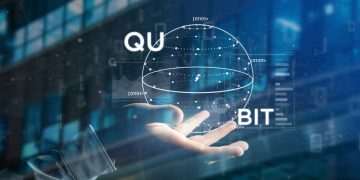
At its core, quantum computing is based on the principles of quantum mechanics, the branch of physics that describes the behavior of particles on the smallest scales—such as atoms and subatomic particles. Unlike classical computers, which use bits (binary units of information that are either 0 or 1), quantum computers use quantum bits (qubits). Qubits are fundamentally different because they can exist in multiple states at once, thanks to the concept of superposition.
While classical bits are constrained to be in one state (0 or 1) at a time, a qubit can be in a superposition of both 0 and 1. This ability allows quantum computers to process information in parallel, providing a massive advantage in certain types of calculations.
1.2 Key Quantum Phenomena: Superposition and Entanglement
- Superposition: As mentioned, a qubit can exist in a superposition of both 0 and 1. This property exponentially increases the amount of information that can be processed simultaneously. For example, while a classical bit can only represent one value at a time, a set of quantum bits can represent multiple combinations of values simultaneously.
- Entanglement: Quantum entanglement occurs when two or more qubits become linked in such a way that the state of one qubit instantaneously influences the state of another, regardless of the distance between them. This phenomenon enables quantum computers to perform complex calculations that would be difficult or impossible for classical computers to achieve.
Together, these properties allow quantum computers to perform tasks that involve large amounts of data or complex operations much faster than classical computers.
1.3 Quantum Interference and Quantum Algorithms
Quantum algorithms take advantage of another key feature of quantum computing: quantum interference. By carefully controlling the interference between the possible states of a quantum system, quantum algorithms can amplify the probability of the correct solution and reduce the probability of incorrect ones. This ability makes quantum computers especially powerful for solving certain types of problems, such as factoring large numbers (important for cryptography) or searching large databases.
Examples of quantum algorithms include:
- Shor’s algorithm: A quantum algorithm for factoring large integers exponentially faster than the best-known classical algorithms. This has profound implications for the field of cryptography.
- Grover’s algorithm: A quantum algorithm that provides a quadratic speedup for searching unsorted databases, potentially transforming areas like data mining, optimization, and machine learning.
2. The Evolution of Quantum Computing Technology
2.1 Early Developments and Milestones
The history of quantum computing can be traced back to the 1980s when Richard Feynman, David Deutsch, and other physicists first proposed the idea that quantum mechanics could be used to simulate physical systems. Feynman, in particular, argued that certain problems in quantum mechanics could not be solved efficiently by classical computers and that a quantum computer would be needed.
In the 1990s, major strides were made with the development of quantum algorithms, including Shor’s algorithm (1994) and Grover’s algorithm (1996). These breakthroughs showed that quantum computers could solve problems that were exponentially more difficult for classical computers.
In the 2000s and 2010s, the focus shifted to hardware development. Companies like IBM, Google, and D-Wave began building prototypes of quantum computers, experimenting with different methods for creating and manipulating qubits. Despite early success, quantum computers remained experimental and were limited by the number of qubits, error rates, and the need for extreme cooling conditions (such as near absolute zero).
2.2 Advances in Quantum Hardware
Quantum computers rely on different methods of qubit generation and manipulation, and the most prominent approaches include:
- Superconducting qubits: Used by companies like IBM and Google, these qubits are created using superconducting circuits and are manipulated with microwave pulses. These systems have made significant progress in recent years, with Google’s Sycamore processor achieving quantum supremacy in 2019 by solving a problem that would take a classical supercomputer thousands of years to solve.
- Trapped ions: This method involves trapping individual ions in electromagnetic fields and using lasers to manipulate their quantum states. Companies like IonQ and Honeywell are leading efforts in this approach. Trapped ions offer high-fidelity qubits but face scalability challenges due to the complexity of controlling large numbers of ions.
- Topological qubits: Proposed by Microsoft, topological qubits are based on exotic particles known as anyons and are designed to be less susceptible to error due to their topological nature. Although this technology is still in the research phase, it holds promise for building more robust and scalable quantum computers.
Each of these approaches has its advantages and challenges, but all of them are working toward the goal of building large-scale, error-tolerant quantum computers.

3. Potential Applications of Quantum Computing
The most exciting aspect of quantum computing is its potential to solve problems that are intractable for classical computers. Let’s explore some of the most promising areas where quantum computing could have a significant impact:
3.1 Cryptography
One of the most talked-about applications of quantum computing is its potential to break classical encryption systems, such as RSA encryption. Using Shor’s algorithm, a large-scale quantum computer could factor large numbers exponentially faster than classical computers, making many of today’s encryption techniques obsolete.
However, this also opens the door for quantum cryptography. Quantum key distribution (QKD) is a method for creating unbreakable encryption systems that rely on the laws of quantum mechanics. Even if an eavesdropper attempts to intercept the key exchange, the quantum properties of the system would reveal their presence.
3.2 Drug Discovery and Materials Science
Quantum computing could have a transformative impact on industries like pharmaceuticals and materials science. Simulating molecular structures and interactions on classical computers is computationally expensive and often impractical for large molecules. Quantum computers, with their ability to handle complex quantum states, could simulate these systems more efficiently.
This ability could lead to faster drug discovery, personalized medicine, and the design of new materials with tailored properties for use in energy, electronics, and manufacturing.
3.3 Optimization Problems
Quantum computers are particularly well-suited for solving optimization problems. These types of problems are encountered in industries like logistics, transportation, finance, and supply chain management. For instance, companies like Volkswagen are experimenting with quantum computing to optimize traffic flow in cities.
In finance, quantum computers could be used for portfolio optimization, risk analysis, and complex pricing models, offering faster and more accurate solutions than classical methods.
3.4 Artificial Intelligence and Machine Learning
Quantum computing holds great promise for advancing machine learning and artificial intelligence. Quantum algorithms could potentially speed up tasks such as data classification, pattern recognition, and natural language processing. Quantum-enhanced machine learning could unlock new possibilities in areas like personalized recommendations, predictive analytics, and autonomous systems.
3.5 Climate Modeling and Environmental Solutions
Understanding and mitigating climate change is one of the most urgent challenges facing humanity. Quantum computers could simulate complex systems like the Earth’s atmosphere and oceans with unprecedented accuracy, helping scientists predict climate patterns, optimize energy consumption, and design sustainable technologies.
4. The Roadblocks to Commercializing Quantum Computing
While the potential of quantum computing is enormous, significant challenges remain before it can be widely adopted. These include:
4.1 Hardware Limitations
As of now, most quantum computers are still in the Noisy Intermediate-Scale Quantum (NISQ) era, meaning they are capable of running only small, noisy quantum circuits. Scaling these systems to hundreds or thousands of qubits while maintaining quantum coherence and low error rates is a formidable task.
4.2 Error Correction
Quantum computers are extremely sensitive to their environment, and qubits are prone to errors due to decoherence and noise. Error correction is a key area of research, and without it, large-scale quantum computers will remain impractical. Developing effective quantum error correction techniques is one of the main hurdles to commercialization.
4.3 Cost and Infrastructure
Building and operating a quantum computer requires specialized facilities and cooling systems to maintain extremely low temperatures. The infrastructure required to support large-scale quantum computing is expensive, and at present, only a few companies and research institutions have the resources to build such systems.
5. The Future of Quantum Computing
Despite these challenges, the future of quantum computing is bright. Continued advances in quantum hardware, algorithms, and software will eventually lead to the development of practical, large-scale quantum computers. Cloud-based quantum computing platforms are already providing access to quantum processors, allowing businesses and researchers to experiment with quantum algorithms without the need for expensive hardware.
In the next decade, we can expect quantum computing to revolutionize fields like cryptography, drug discovery, optimization, and artificial intelligence, opening new possibilities for industries and governments alike.
Conclusion
Quantum computing stands on the brink of transforming the very foundation of modern computing. By leveraging the strange and powerful principles of quantum mechanics, quantum computers have the potential to solve problems that are beyond the reach of classical computers. While challenges remain in scaling quantum hardware, improving error correction, and commercializing the technology, the promise of quantum computing is undeniable.
As researchers, companies, and governments continue to invest in this transformative technology, the next few decades will likely witness breakthroughs that could reshape industries, drive innovation, and unlock entirely new realms of possibility in science and technology. Quantum computing is not just a distant future; it is the future that is already unfolding before us.