





























Introduction
The rollout of 5G networks is poised to be one of the most transformative technological shifts in the 21st century. With the global push toward 5G infrastructure, the internet will experience a fundamental leap forward in terms of speed, capacity, and connectivity. As countries around the world invest heavily in 5G technology, industries and consumers alike are preparing for an entirely new digital landscape.
5G, the fifth generation of mobile network technology, is designed to provide higher speeds, greater bandwidth, and improved latency compared to its predecessors, 4G and 3G. However, its potential goes far beyond faster mobile browsing. 5G promises to be a game-changer for industries ranging from telecommunications and entertainment to automotive and healthcare, enabling innovations that were previously unimaginable.
In this article, we will explore the significance of 5G technology, its potential to revolutionize internet connectivity, and how it will reshape industries across the globe. We will also examine the challenges and opportunities associated with the global deployment of 5G networks and the future implications for consumers, businesses, and governments.
1. Understanding 5G Technology: The Next Frontier in Connectivity
1.1 What is 5G?
5G is the fifth generation of mobile telecommunications technology, succeeding 4G (LTE). It is designed to offer vastly improved performance in several areas:
- Faster Speeds: 5G promises download speeds up to 100 times faster than 4G, with peak download speeds potentially reaching 10 Gbps. This will significantly enhance mobile internet browsing, video streaming, and gaming experiences.
- Lower Latency: Latency refers to the delay between sending and receiving data. 5G promises ultra-low latency, potentially as low as 1 millisecond, which is critical for applications such as autonomous vehicles, remote surgery, and real-time gaming.
- Increased Capacity: 5G is designed to handle a far greater number of devices connected simultaneously. It is expected to support up to 1 million devices per square kilometer, which is crucial for the proliferation of IoT (Internet of Things) devices and smart cities.
- Greater Reliability: 5G will provide more stable and consistent connections, even in areas with high device density, such as sports stadiums, concerts, and urban centers.
1.2 Key Features of 5G Technology
- Millimeter-Wave Spectrum: Unlike earlier generations, 5G can operate on higher frequency bands, particularly in the millimeter-wave (24-100 GHz) range. This allows 5G to deliver faster speeds and greater bandwidth but also poses challenges in terms of range and coverage.
- Network Slicing: 5G enables the concept of network slicing, which allows operators to create virtual networks tailored to specific use cases. For instance, a slice dedicated to autonomous vehicles will have different requirements (high speed, low latency) compared to one used for general internet browsing.
- Massive MIMO (Multiple Input, Multiple Output): 5G uses advanced antenna technology such as massive MIMO, which increases the number of data paths and allows for higher capacity and more efficient use of available spectrum.
2. The Global Race to Deploy 5G Networks
2.1 The Global Efforts to Implement 5G
As of 2023, countries around the world are racing to build and deploy 5G networks, with some nations already offering limited 5G services while others are still in the early stages of rollout. The global push for 5G involves both private telecommunications companies and government regulators, as both play a crucial role in ensuring the infrastructure is in place to meet the demand for high-speed internet and low-latency connectivity.
China, for example, is a world leader in 5G deployment, having rolled out extensive 5G infrastructure in major cities and rural areas. South Korea was the first country to launch nationwide 5G services in 2019, and it continues to expand its network coverage. Meanwhile, the United States has seen multiple telecom giants like Verizon, AT&T, and T-Mobile invest billions of dollars in building out 5G infrastructure.
2.2 The Role of Government Regulations
Governments worldwide have recognized the strategic importance of 5G for both economic growth and national security. Regulatory bodies have been working to allocate the necessary radio spectrum for 5G use and to facilitate the deployment of the required infrastructure.
For instance, the Federal Communications Commission (FCC) in the U.S. has auctioned off valuable spectrum licenses to companies wishing to build 5G networks. Similarly, in Europe, regulatory agencies have worked to streamline the rollout process and ensure fair competition among network providers.
However, the deployment of 5G networks also comes with geopolitical challenges. For example, the U.S. and its allies have raised concerns about the involvement of Chinese companies like Huawei in the deployment of 5G infrastructure, citing potential security risks. As a result, some countries have placed restrictions on Huawei’s participation in 5G deployments.
3. 5G’s Impact on Industries
3.1 Transforming the Telecommunications Industry
The most obvious impact of 5G is on the telecommunications industry. Mobile network operators are investing billions in building the infrastructure needed to support 5G. The shift to 5G will create new business opportunities for telecom companies, including the potential for new revenue streams through 5G-enabled services like virtual reality (VR), augmented reality (AR), and high-definition live streaming.
Moreover, 5G network slicing will allow telecom companies to offer customized solutions for different industries. For example, telecom providers can create low-latency network slices tailored to industries like gaming, autonomous vehicles, and healthcare.
3.2 The Internet of Things (IoT) and Smart Cities
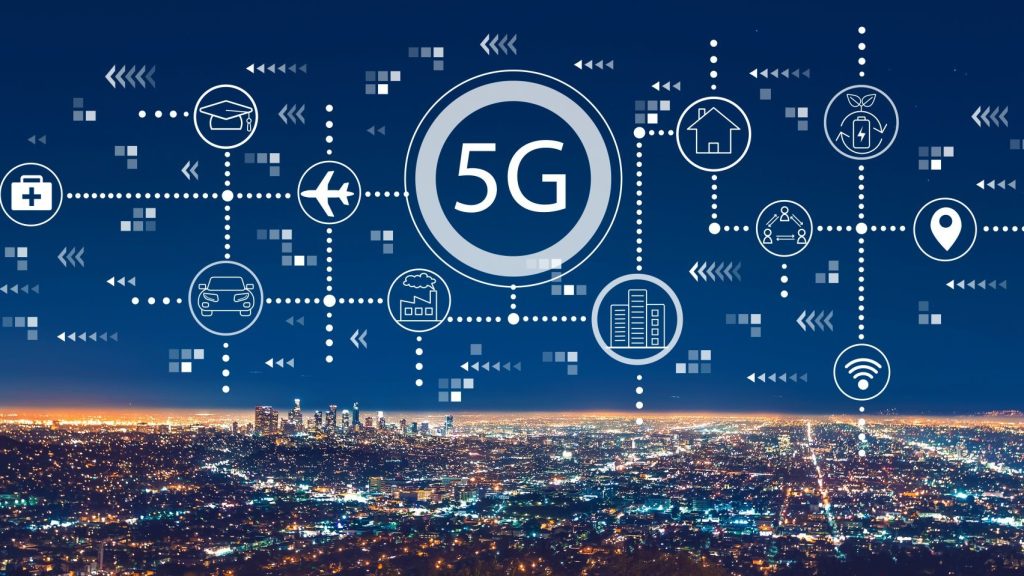
The full potential of 5G will be realized in its ability to support the growing number of IoT devices that are expected to proliferate in the coming years. From smart homes to smart cities, 5G will provide the infrastructure necessary for real-time data exchange between connected devices.
- Smart Cities: With 5G, cities can implement smart traffic systems, intelligent waste management, and public safety systems that operate more efficiently and cost-effectively. The ability to connect millions of IoT devices seamlessly will also enable better management of resources like water, electricity, and public transport.
- Connected Vehicles: 5G will be a key enabler of autonomous vehicles, which require near-instantaneous communication with other vehicles and infrastructure. The low latency of 5G will allow for real-time decision-making, reducing the risk of accidents and improving traffic flow.
3.3 Healthcare and Remote Medical Services
The healthcare industry stands to benefit enormously from the high-speed, low-latency capabilities of 5G. Key applications include:
- Telemedicine: With 5G, healthcare providers can offer remote consultations, where patients and doctors can interact in real-time using high-quality video conferencing without delays or interruptions. This is especially important for rural or underserved populations.
- Remote Surgery: 5G’s ultra-low latency will enable robotic surgeries to be conducted remotely. Surgeons can operate on patients thousands of miles away with precision, reducing the need for patients to travel long distances for specialized care.
- Wearable Health Devices: 5G can enable continuous health monitoring through smart wearables, allowing real-time transmission of vital statistics such as heart rate, glucose levels, and blood pressure to medical professionals.
3.4 Entertainment and Media
The entertainment and media industry will also see profound changes with the arrival of 5G. The technology will enable:
- High-definition live streaming: 5G will make it possible for users to stream 4K and 8K videos with little to no buffering, even in remote areas with limited infrastructure.
- Virtual Reality (VR) and Augmented Reality (AR): With its low latency and high speeds, 5G will fuel the growth of VR and AR applications, enhancing experiences in gaming, retail, and education. For instance, users could enjoy immersive VR experiences in real-time, whether for gaming, virtual tourism, or interactive learning.
4. Challenges in 5G Deployment
4.1 Infrastructure and Investment
One of the primary challenges in the deployment of 5G networks is the infrastructure required to support the technology. 5G networks demand a denser network of small cells, which need to be installed on a much larger scale than current 4G infrastructure. This requires substantial investment in both hardware and installation.
For example, 5G’s reliance on millimeter waves (higher-frequency bands) means that line-of-sight is more important, and coverage is limited by obstructions like buildings or trees. Consequently, telecom operators must install a much larger number of base stations to provide reliable coverage.
4.2 Spectrum Allocation and Regulation
As the rollout of 5G progresses, governments must manage the allocation of radio spectrum—the range of frequencies used to transmit wireless signals. The competition for spectrum rights between countries and telecom operators can create geopolitical tension and delays in deployment. Moreover, regulators must ensure that there is sufficient international coordination to avoid interference between neighboring countries’ 5G networks.
4.3 Security and Privacy Concerns
As 5G networks expand and become more integral to various critical industries, security and privacy concerns are growing. The increase in the number of connected devices through the Internet of Things (IoT) raises the risk of cyberattacks and breaches.
Governments and telecom companies must implement robust security protocols to protect 5G infrastructure and data from malicious actors. This includes encrypting data, securing network protocols, and preventing unauthorized access to critical systems.
Conclusion
The global push for 5G networks is set to revolutionize the way we connect to the internet and interact with technology. With its ability to offer faster speeds, lower latency, and greater capacity, 5G will transform industries across the board—from telecommunications and healthcare to entertainment and autonomous transportation.
While the full deployment of 5G presents significant challenges in terms of infrastructure, spectrum allocation, and security, its potential benefits are vast. As governments, telecom operators, and industries work together to address these challenges, 5G is poised to become the backbone of a new digital era—ushering in a future of greater connectivity, efficiency, and innovation for people and businesses worldwide.