



















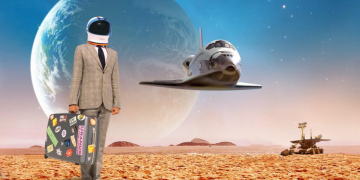



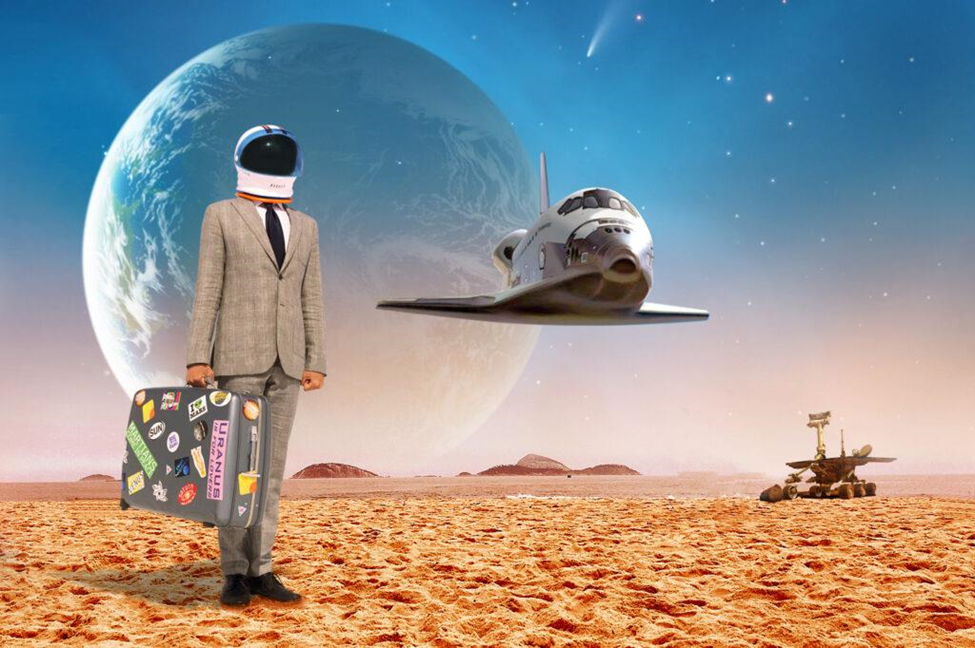
The dream of traveling to space, once the exclusive privilege of astronauts and cosmonauts, is gradually transitioning into a reality for private individuals and tourists. Over the past decade, commercial space tourism has evolved from a concept confined to science fiction to an emerging industry with tangible prospects. Advances in aerospace technology, decreasing launch costs, and growing private sector investment are driving this transformation, signaling a new era in human mobility and exploration beyond our planet.
This article explores the rise of commercial space tourism, examining its technological foundations, leading companies, economic potential, safety challenges, regulatory landscape, and the social and scientific implications of opening space travel to the public.
1. The Origins of Space Tourism
Space tourism, in its modern conception, began with the Russian space program in the early 2000s, when private individuals paid to visit the International Space Station (ISS). The term broadly refers to commercial spaceflight undertaken for leisure, recreation, or adventure rather than scientific research.
1.1 Early Pioneers
In 2001, American businessman Dennis Tito became the first space tourist, paying approximately $20 million for an eight-day stay aboard the ISS aboard a Russian Soyuz spacecraft. Tito’s journey marked a pivotal moment, demonstrating that private individuals could purchase a ticket to orbit, albeit at a prohibitively high price.
Subsequently, other private citizens—including Mark Shuttleworth, Anousheh Ansari, and Guy Laliberté—participated in similar missions, highlighting the potential for commercial space travel. However, these missions were limited in scope, expensive, and primarily operated by governmental space agencies in partnership with private actors.
2. Technological Foundations of Commercial Space Tourism
The expansion of commercial space tourism is closely tied to advances in rocket technology, reusable spacecraft, and life-support systems. The focus has shifted from government-operated missions to privately developed vehicles designed for efficiency, reliability, and safety.
2.1 Reusable Rockets
Historically, space launches were prohibitively expensive because rockets were discarded after a single mission. Companies like SpaceX have revolutionized the industry through reusable rocket technology, notably the Falcon 9. By recovering and refurbishing first-stage boosters, launch costs are drastically reduced, making commercial tourism more economically feasible.
2.2 Suborbital vs. Orbital Tourism
Commercial space tourism generally falls into two categories:
- Suborbital Tourism: This involves brief trips that reach the edge of space, allowing passengers to experience microgravity and view Earth from space without completing a full orbit. Companies such as Blue Origin with its New Shepard rocket and Virgin Galactic with its SpaceShipTwo vehicle focus on suborbital tourism, offering short-duration spaceflights lasting from a few minutes to a couple of hours.
- Orbital Tourism: More ambitious than suborbital trips, orbital tourism involves entering a stable orbit around Earth. Companies like Axiom Space and SpaceX’s Crew Dragon capsule enable private citizens to spend several days aboard the ISS or other orbital destinations, providing a deeper space experience.
2.3 Life-Support and Safety Systems
Ensuring passenger safety is critical. Commercial spacecraft are equipped with advanced life-support systems, redundant safety protocols, and emergency evacuation mechanisms. Additionally, space tourists undergo pre-flight training, including zero-gravity simulations, high-G force exposure, and emergency procedure drills.
3. Leading Players in Commercial Space Tourism
Several private companies are at the forefront of commercial space tourism, each adopting different approaches to market entry, flight duration, and experience design.
3.1 SpaceX
Founded by Elon Musk, SpaceX has transformed orbital spaceflight with its Crew Dragon capsule and Falcon 9 rocket. The company’s Inspiration4 mission in 2021 marked the first all-civilian orbital flight, demonstrating that orbital space tourism is now feasible for private citizens. SpaceX plans to expand orbital tourism through missions to the ISS and eventually lunar flybys.
3.2 Blue Origin
Jeff Bezos’ Blue Origin focuses on suborbital flights using its New Shepard rocket. Designed for brief but exhilarating space experiences, New Shepard allows passengers to experience several minutes of microgravity and observe Earth from the Kármán line, the boundary of space. Blue Origin emphasizes comfort, safety, and repeatable launches.
3.3 Virgin Galactic
Richard Branson’s Virgin Galactic offers suborbital spaceflights with its SpaceShipTwo vehicle. Unlike vertical launch systems, SpaceShipTwo uses a hybrid air-launch approach, providing an alternative, lower-cost entry point into space tourism. Virgin Galactic aims to make space accessible to a broader market segment over time.
3.4 Axiom Space
Aiming to expand orbital tourism beyond brief ISS visits, Axiom Space plans to build a private space station for commercial activities. Its strategy includes longer-duration orbital missions, private research opportunities, and partnerships with multinational corporations for space-based R&D.
4. Economic Potential and Market Growth
The commercial space tourism industry is projected to become a multi-billion-dollar market in the coming decades. Several factors contribute to this growth:
4.1 Ticket Prices and Market Segments
Initial space tourism experiences remain expensive, with suborbital flights costing between $250,000 and $500,000 per seat and orbital missions reaching tens of millions. Despite these high prices, market demand is increasing, fueled by wealthy individuals, corporate sponsorships, and media coverage.
As technology improves and launch costs decrease, prices are expected to drop, opening the market to a wider demographic. Economies of scale, reusable launch systems, and innovative business models like fractional ownership or space travel memberships could accelerate this trend.
4.2 Investment and Venture Capital
Private investment is a major driver of industry growth. Venture capital firms, tech investors, and high-net-worth individuals are funding commercial space companies, recognizing the potential for long-term returns in tourism, R&D, and satellite deployment. The success of companies like SpaceX, Blue Origin, and Virgin Galactic has attracted billions in investment, highlighting investor confidence in the sector.
4.3 Economic Spillover Effects
Beyond ticket sales, commercial space tourism is expected to generate economic spillover effects, including:
- Job Creation: From engineers and technicians to hospitality staff and tourism managers.
- Technological Innovation: Advancements in propulsion, materials, and life-support systems may benefit other industries.
- Tourism Infrastructure: Spaceports, training facilities, and simulation centers will stimulate regional economies.
5. Regulatory and Safety Challenges
Despite its promise, commercial space tourism faces significant regulatory and safety hurdles.
5.1 Government Oversight
In the United States, the Federal Aviation Administration (FAA) regulates commercial spaceflight, issuing launch licenses, monitoring safety, and enforcing environmental compliance. Internationally, space tourism must navigate complex treaties such as the Outer Space Treaty, which governs liability, environmental protection, and national responsibility for space activities.
5.2 Safety Protocols
Safety remains a primary concern due to the inherent risks of rocket launches, high G-forces, and orbital debris. Companies must maintain rigorous testing, redundant systems, and emergency evacuation capabilities. Pre-flight medical evaluations and training are mandatory for passengers to minimize health risks.
5.3 Liability and Insurance
Liability in case of accidents or spacecraft failure is a major concern. Space tourism companies must secure insurance coverage, and passengers often sign waivers acknowledging the risks involved. This legal framework continues to evolve alongside the industry.
6. Social and Scientific Implications
Commercial space tourism is not just a luxury experience; it has profound social and scientific implications.
6.1 Inspiring the Next Generation
Space tourism can inspire interest in STEM fields by demonstrating that space is accessible beyond professional astronauts. Public engagement, media coverage, and first-hand experiences may encourage more students to pursue careers in science, technology, engineering, and mathematics.
6.2 Space-Based Research
Tourists aboard orbital missions can contribute to research, such as microgravity experiments, material studies, and biological investigations. Commercial missions may expand the opportunities for private R&D in space.
6.3 Ethical and Environmental Considerations
The growth of space tourism raises questions about environmental impact, resource allocation, and ethical access. While rocket launches contribute to greenhouse gas emissions, advances in green propulsion and carbon offset initiatives aim to mitigate environmental effects. Equity issues—who can afford space travel and who benefits—remain a topic of societal discussion.
7. The Future of Commercial Space Tourism
The future of commercial space tourism is poised for exponential growth, shaped by technological innovation, decreasing costs, and broader market access. Key trends include:
- Longer Orbital Missions: Extended stays aboard private space stations for research, leisure, and even entertainment.
- Interplanetary Tourism: Preparatory steps toward lunar flybys and eventually Mars tourism.
- Integration with Virtual Reality: Pre-flight VR simulations and in-flight experiences enhancing the sense of space immersion.
- Space Hospitality: Development of orbital hotels and luxury accommodations tailored to private space travelers.
The coming decades may see space tourism transition from an exclusive niche market to a mainstream, albeit premium, leisure experience.
Conclusion
Commercial space tourism represents the next frontier of human exploration, combining technological innovation, private enterprise, and human curiosity. From suborbital flights to orbital missions and beyond, this emerging industry is reshaping the concept of travel, offering new experiences, economic opportunities, and scientific advancements. While challenges in safety, regulation, and cost remain, the trajectory of commercial space tourism suggests that the era when civilians can routinely venture beyond Earth is closer than ever. Humanity stands at the threshold of an exciting new chapter—where space is not only a realm for astronauts but an accessible frontier for all who dream to explore it.