

























Artificial Intelligence (AI) has long been associated with smart assistants like Siri, Alexa, and Google Assistant—tools that can manage tasks, set reminders, and answer questions. However, the potential of AI extends far beyond these consumer-focused applications. As AI technologies continue to evolve, they are transforming various industries, providing unprecedented opportunities for automation, improving healthcare through precision medicine, and contributing to the development of smart cities. In fact, AI is becoming an indispensable tool in fields such as manufacturing, healthcare, transportation, energy management, and urban planning.
This article delves into the vast and diverse applications of AI across different domains, illustrating how this technology is reshaping industries and contributing to innovation and efficiency. By examining the impact of AI on automation, healthcare, and smart cities, we will explore how AI-driven solutions are creating smarter, more sustainable, and more efficient systems across the globe.
1. AI in Industrial Automation
The application of AI in industrial automation represents one of the most profound shifts in the manufacturing sector. Traditionally, production lines relied on manual labor and basic automation, often limited to repetitive tasks. However, with the rise of AI, factories are becoming smart factories, where machines and systems are capable of making real-time decisions, optimizing production, and maintaining efficiency without constant human intervention.
1.1 Robotics and AI-driven Automation
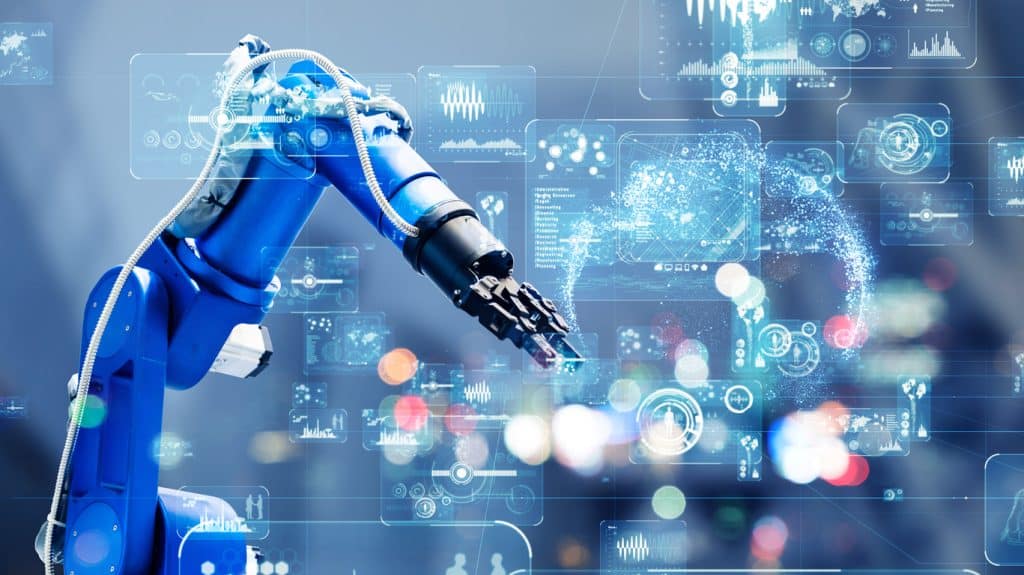
One of the key advancements in industrial automation is the deployment of AI-driven robots. These robots are equipped with machine learning algorithms that allow them to perform complex tasks such as assembly, quality control, and packaging with greater precision and speed than traditional machines.
- Collaborative Robots (Cobots): Unlike traditional robots that are isolated from human workers, cobots are designed to work alongside humans. They use AI to adapt to changes in the environment, ensuring a safer and more flexible work environment.
- Automated Guided Vehicles (AGVs): AI-powered vehicles are used in warehouses and factories to transport materials and products without human input. These vehicles rely on computer vision and deep learning to navigate complex environments, avoiding obstacles and improving logistics efficiency.
- Predictive Maintenance: AI is used to monitor the condition of machines in real-time and predict when they are likely to fail. This allows for predictive maintenance, reducing downtime and increasing the overall lifespan of expensive equipment. Machine learning models are trained on sensor data to identify signs of wear and tear, enabling businesses to perform maintenance only when necessary, rather than following a fixed schedule.
1.2 AI in Supply Chain Management
In addition to improving the manufacturing process, AI plays a crucial role in optimizing supply chains. Supply chain management is a highly complex task, involving the coordination of various moving parts, including inventory management, transportation, and demand forecasting. AI enables smarter decision-making by:
- Demand Forecasting: Machine learning models predict product demand based on historical data, seasonal trends, and market conditions. This helps businesses plan inventory and avoid overproduction or stockouts.
- Route Optimization: AI analyzes traffic, weather, and historical data to determine the most efficient routes for delivery vehicles, reducing transportation costs and delivery times.
- Supply Chain Risk Management: AI systems can identify potential disruptions in the supply chain, such as natural disasters, labor strikes, or geopolitical tensions, and help businesses develop contingency plans to mitigate the impact.
2. AI in Precision Medicine
AI’s influence on healthcare has been transformative, particularly in the field of precision medicine, where treatments and healthcare strategies are tailored to individual patients based on their genetic makeup, lifestyle, and environment. The ability of AI to analyze vast datasets and uncover hidden patterns has led to a revolution in medical diagnostics, treatment planning, and drug development.
2.1 AI in Medical Diagnostics
AI has dramatically improved the ability of doctors and healthcare professionals to diagnose diseases accurately and quickly. Machine learning algorithms are trained on large datasets of medical images, such as X-rays, MRIs, and CT scans, to recognize patterns that may be indicative of diseases such as cancer, cardiovascular diseases, and neurological disorders.
- Image Recognition and Analysis: AI models can identify abnormalities in medical images faster than human doctors. For example, AI systems have been used to detect early-stage cancers (such as lung cancer and breast cancer) in medical imaging, sometimes with higher accuracy than radiologists.
- Diagnostic Assistance: AI tools can analyze patient symptoms, medical history, and test results to suggest potential diagnoses. This helps doctors make more informed decisions, especially in complex cases where multiple conditions may be present.
2.2 AI in Personalized Treatment and Drug Development
AI is also revolutionizing how personalized treatments are developed. By analyzing genetic data and clinical records, machine learning models can identify which treatments are most likely to be effective for a particular patient.
- Precision Drug Discovery: AI is accelerating the drug discovery process by predicting which molecules will interact effectively with the human body. AI systems can sift through massive databases of molecular structures and biological data to find new drug candidates faster and more efficiently than traditional methods.
- Personalized Treatment Plans: AI can analyze a patient’s genetic information and medical history to design personalized treatment plans. This approach is particularly beneficial in treating complex diseases like cancer, where genetic variations play a significant role in how a patient responds to treatment.
2.3 AI in Healthcare Administration
Beyond diagnostics and treatment, AI is also improving the efficiency of healthcare administration. From streamlining patient intake processes to optimizing hospital management, AI is being used to reduce costs, improve service delivery, and enhance patient satisfaction.
- Automated Scheduling: AI systems can automatically schedule appointments based on patient preferences and doctor availability, reducing waiting times and improving patient flow.
- Natural Language Processing (NLP) for Medical Records: AI-powered NLP tools analyze patient records and clinical notes to extract meaningful insights. This allows healthcare professionals to make quicker, data-driven decisions.
3. AI in Smart Cities
AI’s role in the development of smart cities is a major area of innovation, where technology is leveraged to improve urban living. Smart cities use AI to manage everything from traffic flow to energy consumption, providing residents with a higher quality of life while promoting sustainability.
3.1 AI in Traffic and Transportation Management
One of the most visible applications of AI in smart cities is intelligent transportation systems. AI is used to optimize traffic flow, reduce congestion, and improve public transportation systems.
- Traffic Prediction and Management: AI models analyze traffic data from sensors, cameras, and GPS devices to predict congestion and adjust traffic signals in real time, improving traffic flow and reducing bottlenecks.
- Autonomous Public Transport: AI-powered autonomous buses and trains are being developed to improve public transportation efficiency. These systems use machine learning to optimize routes and schedules based on real-time data and passenger demand.
- Ride-Sharing and Mobility-as-a-Service (MaaS): AI powers ride-sharing platforms like Uber and Lyft, which use algorithms to match passengers with the nearest drivers, optimize routes, and predict travel times.
3.2 AI in Energy and Resource Management
Energy management is another critical area where AI is playing a transformative role. By optimizing the use of resources such as electricity and water, AI contributes to making cities more sustainable.
- Smart Grids: AI systems monitor and control the flow of electricity across smart grids, ensuring that energy is distributed efficiently and that outages are minimized. These systems can predict energy demand and balance supply in real time.
- Renewable Energy Integration: AI optimizes the integration of renewable energy sources, such as solar and wind, into the power grid. By forecasting energy production from these sources, AI helps utilities adjust grid operations to accommodate fluctuating renewable energy inputs.
- Smart Buildings: AI is used to manage heating, ventilation, and air conditioning (HVAC) systems, lighting, and other building operations to optimize energy use. This leads to lower energy consumption and reduced carbon footprints.
3.3 AI in Public Safety and Emergency Response
AI is also being deployed to improve public safety and emergency response. By analyzing data from various sources—such as cameras, sensors, and social media—AI can help predict and respond to incidents more efficiently.
- Predictive Policing: AI models analyze crime data to predict where crimes are likely to occur, allowing law enforcement to allocate resources more effectively. However, this application has raised concerns about bias and privacy, necessitating careful regulation.
- Disaster Management: In the event of natural disasters, AI is used to analyze real-time data from satellite imagery and sensors to coordinate rescue operations and allocate resources efficiently. AI-powered drones and robots are also used to assist in search and rescue efforts.
3.4 AI in Urban Planning and Development
AI is being used to optimize urban planning and development. By analyzing vast amounts of data from sensors, satellite imagery, and social media, AI can help city planners make informed decisions about infrastructure development, zoning, and public services.
- Urban Heat Island Mapping: AI is used to identify areas in cities that are prone to higher temperatures due to urbanization. This helps urban planners create strategies for reducing heat through green spaces, reflective surfaces, and better building designs.
- Traffic Flow Analysis: AI analyzes traffic patterns and predicts future congestion, enabling better planning for road construction, public transport routes, and pedestrian areas.
4. Challenges and Ethical Considerations
While AI offers significant benefits across various sectors, its rapid adoption also raises several challenges and ethical considerations.
4.1 Data Privacy and Security
AI systems often rely on vast amounts of data, some of which can be sensitive. Ensuring data privacy and security is critical, especially in sectors like healthcare, where personal and medical information is involved.
4.2 Bias and Fairness
AI algorithms are only as good as the data they are trained on. If the data contains biases, AI systems may inadvertently perpetuate these biases, leading to unfair outcomes in areas such as hiring, law enforcement, and lending.
4.3 Job Displacement
As AI automates more tasks, there are concerns about job displacement, particularly in industries like manufacturing, retail, and transportation. Reskilling and upskilling programs will be essential to ensure workers can transition to new roles in an AI-driven economy.
4.4 Ethical AI Deployment
AI systems must be deployed ethically, ensuring that they are transparent, accountable, and aligned with human values. This includes addressing concerns about surveillance, autonomy, and the potential for AI to be used for harmful purposes.
5. Conclusion
AI is no longer limited to the realm of science fiction or consumer-focused tools like virtual assistants. It is now a key driver of change across multiple industries, revolutionizing sectors like manufacturing, healthcare, and urban planning. From automated production lines to precision medicine and the creation of smart cities, AI is enhancing efficiency, improving quality of life, and contributing to sustainability. However, as AI technologies continue to evolve, we must remain vigilant about the ethical and societal implications, ensuring that these innovations are developed and implemented responsibly. With careful consideration and thoughtful regulation, AI has the potential to reshape our world in profound and positive ways, creating smarter, healthier, and more sustainable environments for future generations