










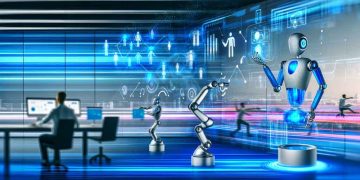



















Artificial General Intelligence (AGI) is widely regarded as one of the most ambitious goals in the field of artificial intelligence. Unlike narrow AI, which excels at specific tasks such as image recognition or natural language processing, AGI refers to a form of AI capable of understanding, learning, and applying intelligence across a wide range of tasks—much like human beings. AGI is expected to have the capacity to reason, plan, solve problems, think abstractly, comprehend complex ideas, learn quickly, and learn from experience, all with a level of flexibility that traditional AI systems currently lack.
The realization of AGI represents not just a technological breakthrough, but a paradigm shift that could have far-reaching consequences for various sectors, including healthcare, education, finance, manufacturing, and entertainment, among others. From transforming industries and labor markets to raising significant ethical questions, the impact of AGI could shape the future of humanity in ways that are difficult to predict.
This article explores the potential consequences of achieving AGI, examining how it might revolutionize multiple sectors, the challenges it presents, and the broader implications for society. We will analyze both the opportunities and risks associated with AGI, while considering its implications on employment, governance, ethics, and global competitiveness.
1. Understanding Artificial General Intelligence (AGI)
1.1 What is AGI?
At its core, Artificial General Intelligence (AGI) refers to a machine’s ability to perform any intellectual task that a human can. This means that AGI systems would not only be able to perform specific, predefined tasks but could also generalize learning from one task to another without being specifically programmed for each one.
Key characteristics of AGI include:
- Cognitive Flexibility: The ability to adapt to new and unforeseen situations and tasks.
- Learning and Memory: The ability to learn from a diverse set of experiences and remember past encounters to improve performance over time.
- Autonomy and Decision-Making: AGI systems would make independent decisions based on reasoning and understanding, much like human decision-making.
- Complex Problem Solving: The capacity to engage in high-level problem solving across various fields, including areas where human-level creativity and reasoning are required.
In short, AGI seeks to emulate the generalized intelligence that humans exhibit, rather than being constrained to narrow tasks. While AGI is still in its conceptual and research stages, its potential to radically transform industries is immense.
1.2 How Does AGI Differ from Narrow AI?
Narrow AI, also known as weak AI, is the type of AI that exists today. It excels in specific areas such as image recognition, recommendation algorithms, and language translation. Narrow AI is highly specialized but lacks the ability to transfer its knowledge to other domains or tasks without significant retraining.
AGI, in contrast, would possess a much broader range of capabilities:
- It could engage in multi-disciplinary problem-solving across fields such as medicine, engineering, law, and more.
- It could transfer knowledge from one task to another without needing new datasets for each one.
- AGI would demonstrate a level of creativity and innovation that currently only humans can display.
The transition from narrow AI to AGI represents a profound leap forward in the development of artificial intelligence.
2. Potential Impacts of AGI Across Various Industries
2.1 Healthcare: Revolutionizing Patient Care and Medical Research
The healthcare industry stands to benefit significantly from AGI, particularly in areas like diagnostics, personalized medicine, drug discovery, and patient care. AGI could enable the following advances:
- AI-Driven Diagnostics: AGI could analyze medical records, lab results, and clinical data to identify patterns and diagnose conditions with greater accuracy than human doctors. It could also recommend treatment plans based on an understanding of the latest research and patient-specific factors.
- Drug Discovery and Development: AGI’s ability to process vast amounts of data and simulate biological systems could speed up the development of new drugs, reducing the time and cost required for clinical trials and potentially leading to breakthroughs in treatment for diseases like cancer, Alzheimer’s, and autoimmune disorders.
- Robotic Surgery: With advanced problem-solving abilities, AGI-powered robots could perform complex surgeries with precision, improving patient outcomes and reducing the risk of human error.
Additionally, AGI could personalize healthcare by tailoring treatments to the individual based on their genetic makeup, lifestyle, and medical history. By optimizing workflows, AGI could reduce the burden on healthcare professionals, allowing them to focus on higher-level patient care.
2.2 Finance: Transforming Risk Assessment and Market Strategy
In the finance industry, AGI could dramatically alter the way investments are managed, risks are assessed, and financial markets are analyzed. Key areas of transformation include:
- Real-Time Market Analysis: AGI could process and analyze vast amounts of real-time market data, providing financial institutions with actionable insights. It could predict market trends with unprecedented accuracy, enabling firms to respond more swiftly to market fluctuations.
- Risk Management: By understanding complex economic patterns and using advanced predictive models, AGI could assess risks more effectively. It could recommend portfolio adjustments based on both short-term and long-term forecasts, improving the financial stability of businesses and investors.
- Algorithmic Trading: AGI could take over complex trading strategies, executing trades based on real-time data and market behavior. Unlike current algorithmic trading systems, AGI could adapt its approach based on market conditions, potentially outperforming human traders.
Moreover, AGI could enhance financial regulation by identifying fraud and market manipulation patterns, improving transparency and fairness in financial markets.
2.3 Manufacturing: Driving Automation and Precision
Manufacturing is one of the sectors most likely to be reshaped by AGI. The potential applications include:
- Fully Automated Production Lines: AGI could control and optimize production processes, adjusting workflows in real-time to maximize efficiency. This would improve quality control and reduce production costs, all while maintaining high standards of safety and reliability.
- Predictive Maintenance: AGI could predict when machines need maintenance or are likely to fail, preventing costly downtime and improving the lifespan of equipment. By continuously monitoring and analyzing the performance of factory machinery, AGI could schedule maintenance tasks proactively.
- Supply Chain Optimization: AGI could manage entire supply chains by predicting demand, adjusting inventories, and optimizing logistics in real-time. This would lead to reduced waste, more efficient resource allocation, and better response times to fluctuations in demand.
In sum, AGI could make manufacturing processes faster, more efficient, and more sustainable, while reducing operational risks.
2.4 Education: Personalizing Learning and Administrative Tasks
The education sector could be transformed by AGI through more personalized and adaptive learning environments:
- Personalized Education: AGI could create individualized learning plans for students, identifying strengths, weaknesses, and preferred learning styles. It could adapt content in real-time to suit the student’s pace and cognitive abilities, leading to more effective learning outcomes.
- Teacher Support: AGI could automate administrative tasks such as grading, lesson planning, and student assessment, allowing teachers to focus on more meaningful interactions with students. By analyzing student performance data, AGI could also offer insights into classroom dynamics and suggest strategies for improving student engagement.
- Research Assistance: AGI could assist educators and researchers by quickly analyzing vast datasets, providing summaries of existing literature, and even suggesting new research directions. It could streamline the research process, making scientific breakthroughs more achievable.
By improving the quality of education and administrative efficiency, AGI could help make education more accessible and effective on a global scale.
2.5 Entertainment and Creative Industries: Enhancing Content Creation
AGI’s influence could extend to the entertainment industry, where it could be used to create entirely new forms of media:
- Automated Content Creation: AGI could write novels, compose music, produce films, and create artwork based on given prompts, potentially revolutionizing the creative process. Unlike current AI tools, which require extensive human input, AGI would be capable of independent creative expression, pushing the boundaries of traditional art forms.
- Interactive Gaming: AGI could develop fully immersive gaming experiences by adapting game narratives and environments in real-time based on the player’s choices, creating unique gameplay experiences each time.
- Personalized Media: AGI could curate content for individuals based on their preferences, emotional states, and context, creating tailored entertainment experiences. This could apply to streaming platforms, video games, and even live events.
The creative potential of AGI could redefine what it means to produce and consume entertainment, ushering in an era of personalized, AI-driven content creation.

3. The Ethical and Societal Challenges of AGI
While the potential benefits of AGI are vast, its development and deployment raise significant ethical and societal concerns:
- Job Displacement: As AGI automates tasks across industries, there is a risk of significant job displacement. Many routine and even skilled jobs could be replaced by AGI systems, leading to economic disruption and the need for new approaches to education and workforce training.
- Ethical Decision-Making: AGI systems will likely be called upon to make ethical decisions, especially in high-stakes environments like healthcare and criminal justice. Determining how AGI should make moral choices, especially in situations with conflicting values, is an ongoing challenge.
- Control and Governance: The sheer power of AGI could pose risks if it is not properly controlled. If AGI were to exceed human intelligence and capabilities, there would need to be robust governance mechanisms in place to ensure its actions align with human values and safety.
- Privacy and Security: AGI systems will have access to vast amounts of personal and sensitive data, raising concerns about privacy and cybersecurity. Safeguards will be necessary to protect individuals’ data and ensure that AGI systems are used for the greater good.
Addressing these concerns will require collaboration between governments, businesses, and technologists to establish guidelines and frameworks for the responsible development of AGI.
4. Conclusion: The Future of AGI and Its Impact
The potential of Artificial General Intelligence (AGI) is immense, with the ability to revolutionize industries ranging from healthcare and education to finance and entertainment. AGI promises to improve efficiency, foster innovation, and create new opportunities for human advancement. However, it also presents complex challenges related to ethics, societal change, and governance.
As AGI continues to evolve, its impact on the global workforce, economic systems, and even the very nature of creativity and intelligence will become more apparent. It is crucial to approach the development of AGI with caution, ensuring that it is used to benefit humanity as a whole, while addressing the risks and challenges it presents.
In the coming decades, AGI will likely play an integral role in shaping the future, offering both unprecedented possibilities and new responsibilities for all of society. Through careful planning, ethical oversight, and international cooperation, we can guide the development of AGI to ensure that it serves as a powerful tool for positive change in the world.